“We adore chaos because we love to produce order.” ~M. C. Escher
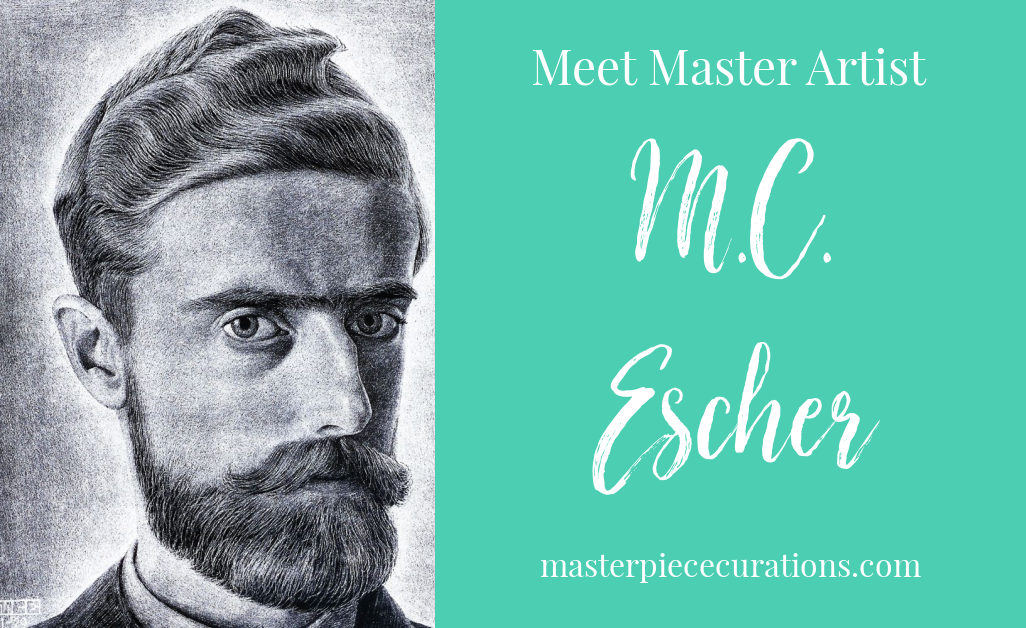
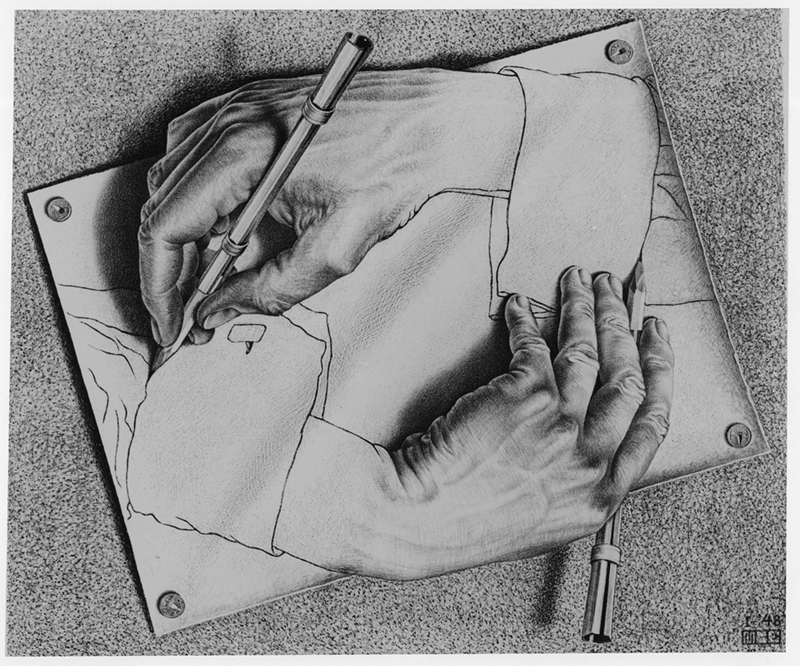
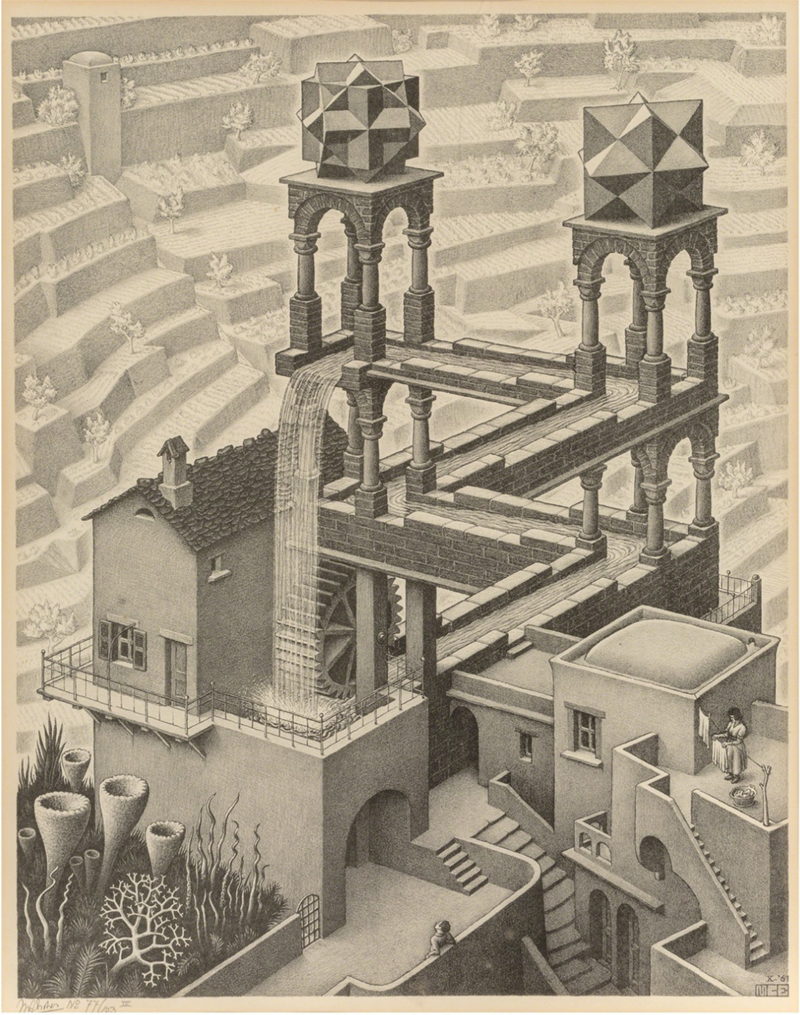
M.C. Escher (Maurits Cornelis Escher) was a Dutch graphic artist known for his mind-bending artworks that explore mathematical concepts, optical illusions, and impossible architecture. Escher developed a unique artistic style that combined meticulous detail with imaginative perspectives.
Born on June 17, 1898 in Leeuwarden, Netherlands (pronunciation), Maurits Cornelis Escher was always interested in art and drawing. As a child, he often copied the work of other artists, and his father encouraged his talent. During this time, he also developed a love for geometry and other mathematical concepts, which would later play a significant role in his artwork.
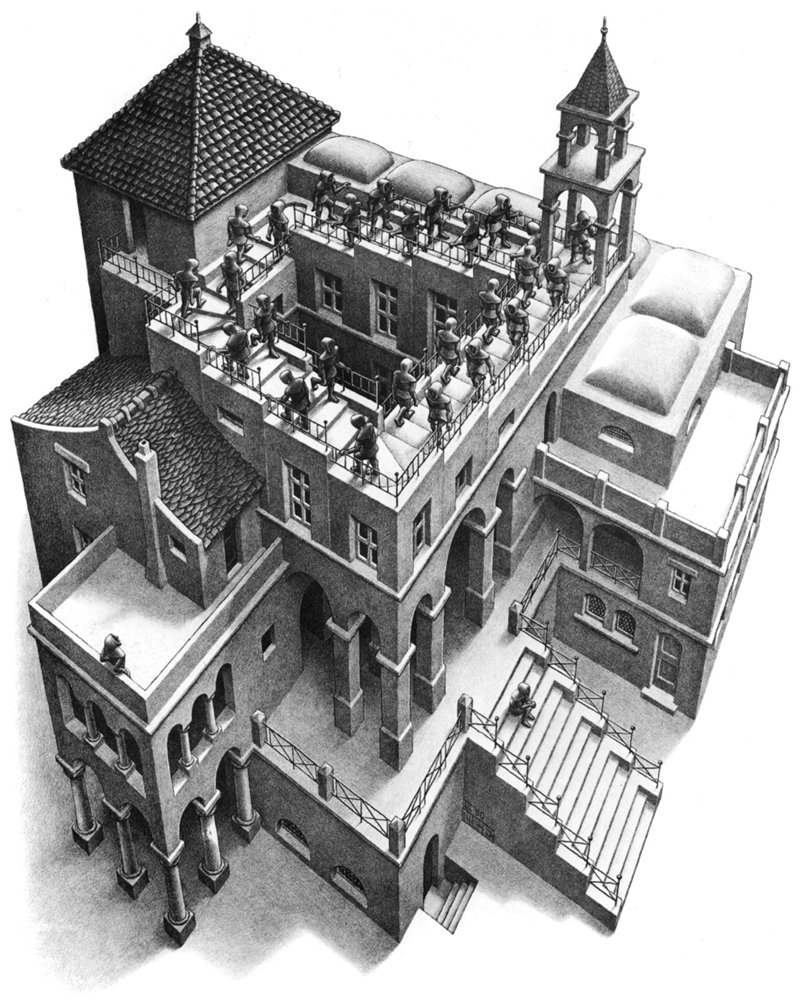
After completing school, Escher enrolled in the Haarlem School of Architecture and Decorative Arts. However, he found the program uninspiring and ultimately dropped out after just one year. He then traveled throughout Europe, spending time in Spain, Italy, and Switzerland. His experiences there and exposure to different cultures and art styles would drastically shape his future work.
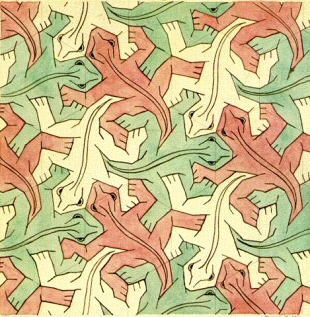
When Escher returned to the Netherlands in 1922, he took up woodcutting and lithographs. He soon developed his own style, incorporating mathematical concepts and tessellations (patterns made up of interlocking shapes). He was fascinated by optical illusions and impossible structures and often incorporated them into his pieces, creating images that seem to defy the laws of physics.

When Escher returned to the Netherlands in 1922, he took up woodcutting and lithographs. He soon developed his own style, incorporating mathematical concepts and tessellations (patterns made up of interlocking shapes). He was fascinated by optical illusions and impossible structures and often incorporated them into his pieces, creating images that seem to defy the laws of physics.
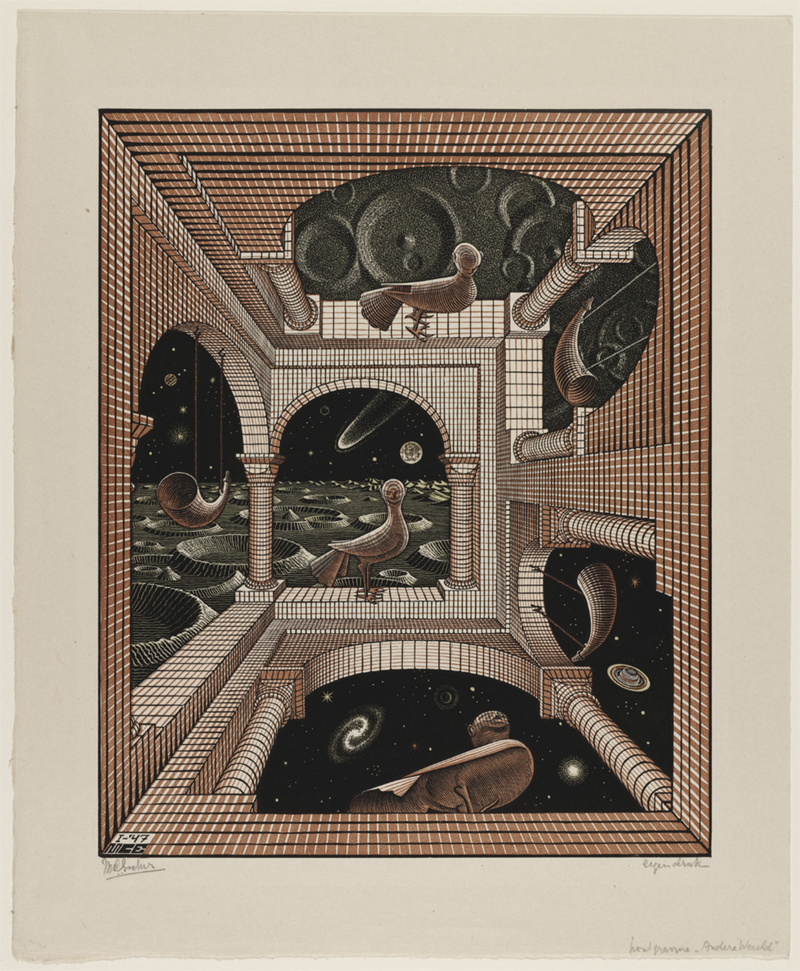
He married Jetta Umiker in 1924 and they had three sons. Escher lived most of his life in Rome, until he died of cancer on March 27, 1972.
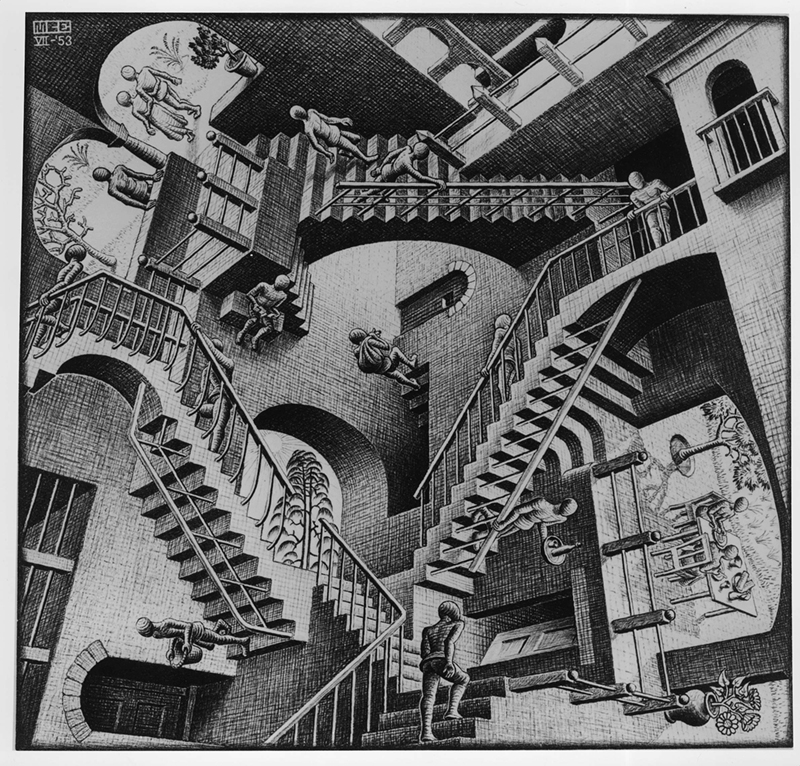
Despite his incredible talent, Escher was not widely recognized during his lifetime. It wasn’t until after his death that his work began to gain international acclaim. Today, Escher is considered one of the most important artists of the 20th century, and is remembered for creating some of the most famous tessellations in the world.
M.C. Escher. The Graphic Work M.C. Escher: His Life and Complete Graphic Work (With a Fully Illustrated Catalogue)M.C. ESCHER THE GRAPHIC WORK


For more project ideas, check out these M.C. Escher-inspired art projects here:
Quick & Easy Tessellation Art for Kids by The Masterpiece Society
Tessellation Art for Kids by Meaningful Mama
Oil Resist Escher Tessellation Art STEAM Activity by Our Family Code