Art Nouveau was one of the most elegant and recognizable art movements of the late 19th and early 20th centuries. The word “Art Nouveau” means “New Art,” and that’s exactly what artists and designers during this era wanted to create.
Rather than copying historical styles, they wanted a fresh visual language inspired by flowers, vines, birds, curving lines, natural forms, asymmetry, decorative beauty, etc.
Art Nouveau appeared not only in paintings, but also in:
- architecture
- furniture
- jewelry
- posters
- stained glass
- book illustration
- ceramics
- textiles
- interior design
Artists wanted beauty to become part of everyday life, and that’s one reason why Art Nouveau feels so immersive.
Some of the most famous Art Nouveau artists and designers include Alphonse Mucha, Gustav Klimt, Aubrey Beardsley, Louis Comfort Tiffany, Antoni Gaudí, Hector Guimard, René Lalique, and Émile Gallé.
In this guide, we’ll explore the Art Nouveau movement, its historical background, characteristics, famous artists, architecture, decorative arts, and picture study suggestions you can use with children or students.
What Was Art Nouveau?
Art Nouveau was an international art and design movement that flourished from the late 1800s into the early 1900s.
The artists of this movement wanted to create a new style suited to the modern age, and so they rejected the constant imitation of older styles such as Gothic, Renaissance, Baroque, Rococo, and Neoclassical.
Instead, Art Nouveau artists believed there didn’t have to be a boundary between fine art and useful objects. Ordinary things such as chairs, doorways, lamps, and posters could be art. Thus, this movement brought artistic design into everyday life.
When Was the Art Nouveau Period?
Art Nouveau flourished primarily between 1890 and 1914, though its beginnings can be traced into the 1880s, and its influence continued after World War I.
Early Art Nouveau (c. 1880–1890)
Artists and designers began to turn toward natural forms, craftsmanship, Japanese art, and decorative design.
High Art Nouveau (c. 1890–1905)
Art Nouveau spread rapidly throughout Europe and the United States. Architecture, posters, furniture, jewelry, stained glass, and interior design all embraced the new style.
Late Art Nouveau (c. 1905–1914)
The movement continued evolving but began to overlap with Vienna Secession, early Modernism, and geometric design. World War I also marked a major cultural break, and Art Nouveau gradually gave way to other styles.
Historical Background and Timeline of Art Nouveau
Art Nouveau emerged during a rapidly changing industrial world.
Mid-1800s: Industrialization Transforms Design
Factories made it possible to mass-produce objects at a much cheaper rate. But many artists and designers worried that mass production was creating poorly designed goods and destroying traditional craftsmanship. This concern had already helped inspire the Arts and Crafts Movement.
1860s–1880s: William Morris and Arts and Crafts
William Morris promoted craftsmanship, natural patterns, and beautiful everyday objects, and his ideas strongly influenced later Art Nouveau designers.
Late 1800s: Japanese Art Influences Europe
Japanese prints, ceramics, textiles, and decorative objects became increasingly popular in Europe. Artists admired flattened shapes, asymmetry, and bold outlines. This fascination, often called Japonisme, profoundly influenced Art Nouveau.
1880s: New Decorative Styles Emerge
Artists across Europe began developing new approaches to how they designed things. Posters and illustrations, furniture and architecture, jewelry and fashion… it was all changing so rapidly, and different countries developed different versions of the style.
1895: Maison de l’Art Nouveau Opens in Paris
Art dealer Siegfried Bing opened a gallery called Maison de l’Art Nouveau (House of New Art) and its name helped popularize the term used for the movement.
1890s: Mucha’s Posters Become Famous
Czech artist Alphonse Mucha created elaborate posters featuring actress Sarah Bernhardt. His graceful figures, flowers, halos, and decorative lettering became closely associated with Art Nouveau.
1890s–1900s: Art Nouveau Architecture Expands
Architects such as Victor Horta, Hector Guimard, and Antoni Gaudí created buildings filled with curved lines and organic forms.
1900: Paris Exposition
The Exposition Universelle (World Exposition) in Paris helped spread Art Nouveau internationally.
1900s: Vienna Secession Develops
Artists such as Gustav Klimt developed a more geometric version of modern decorative art. The Vienna Secession overlapped with Art Nouveau while developing its own distinctive character.
1914: World War I Begins
The Great War disrupted European artistic life, and afterward, designers moved more and more toward simple, geometric forms.
Characteristics of Art Nouveau
Art Nouveau is often very easy to recognize because its decorative language is so distinctive.
1. Flowing Curved Lines
Perhaps the most famous characteristic of Art Nouveau is its long, flowing curve.
This is sometimes called the “whiplash line,” making use of lines that may resemble more natural things such as vines, stems, waves, hair, etc. They bend and curl rather than remaining rigid.
2. Nature
Art Nouveau artists looked to nature for inspiration, and so became a common theme in their designs, often transforming them into repeating decorative patterns.
3. Organic Shapes
Art Nouveau designers avoided boxy forms whenever possible, preferring to create shapes that were more fluid. Even architecture can seem almost plant-like.
4. Decorative Pattern
Pattern is very common. Hair, fabric, flowers, borders, and backgrounds may become intricate decorative surfaces.
5. Asymmetry
Art Nouveau compositions are often intentionally unbalanced and asymmetrical, which was partly influenced by Japanese art.
6. Elegant Female Figures
Women appear frequently in Art Nouveau posters and illustrations, often depicted with long, flowing hair, graceful poses, and elaborate clothing. Their figures are usually woven directly into the surrounding decorative patterns, so the woman and the design become part of one unified, flowing composition.
7. Flattened Space
Many Art Nouveau works contain large areas of flat, unshaded color instead of realistic space. This was another style that was influenced by Japanese prints.
8. Decorative Lettering
Text was also treated as an essential part of the artwork. Artists carefully integrated lettering into their compositions, allowing the flowing lines and decorative forms of the typography to work together with the figures and imagery as one unified design.
9. Unity of Art and Design
Art Nouveau artists wanted all parts of a space to work together, and so architecture, furniture, lamps, wallpaper, windows, and decoration might be designed as one unified environment.
10. Craftsmanship
Although Art Nouveau emerged during industrialization, many artists continued to value handmade objects, fine materials, and skilled craftsmanship, therefore linking Art Nouveau with the Arts and Crafts Movement.
Art Nouveau Architecture
Architecture is one of the most exciting expressions of Art Nouveau. Rather than adding decoration after designing a building, Art Nouveau architects often made decoration part of the structure itself. Thus, buildings could include:
- curved walls
- flowing ironwork
- organic windows
- floral mosaics
- sculpted surfaces
- asymmetrical façades
- colorful tiles
- decorative glass
Victor Horta
Belgian architect Victor Horta became one of the pioneers of Art Nouveau architecture. His buildings often include iron staircases, curving railings, skylights, mosaics, and flowing interior spaces. The Hôtel Tassel in Brussels is one of the earliest major examples of Art Nouveau architecture.
Hector Guimard
French architect Hector Guimard became famous for designing entrances to the Paris Métro. Their green iron forms resemble stems and vines, flowers and insects, turning something as ordinary as public transportation into decorative art.
Antoni Gaudí
Spanish architect Antoni Gaudí developed an extraordinary architectural style in Barcelona, using colorful mosaics and organic shapes inspired by nature to create something that almost feels alive. Famous buildings include:
- Casa Batlló
- Casa Milà
- Park Güell
- Sagrada Família
Art Nouveau and the Decorative Arts
Art Nouveau flourished especially in decorative objects.
- Stained glass windows were filled with birds, flowers, and different types of landscapes.
- Furniture could have legs or arms resembling branches, vines, and stems.
- Jewelry designers used insects and flowers in their designs, while incorporating enamel, gemstones, and glass. Some pieces almost seem like miniature sculptures.
- Glassmakers created vessels shaped like flowers and leaves, with colors and textures made to imitate nature.
- Advertising posters became an important artistic medium as well. Rather than being considered merely commercial, posters could demonstrate sophisticated design.
Famous Artists and Designers of Art Nouveau
Alphonse Mucha (1860–1939)
Czech artist Alphonse Mucha became one of the most recognizable artists associated with Art Nouveau. His posters often feature graceful women with long flowing hair and elaborate floral designs. Mucha later disliked having his work reduced to the Art Nouveau label, but his visual style became closely associated with the movement.
Famous works include:
- Gismonda
- Job Cigarettes
- The Seasons
- Zodiac
- The Arts
Gustav Klimt (1862–1918)
Austrian artist Gustav Klimt was a founding member of the Vienna Secession. His work overlapped with Art Nouveau while developing its own distinctive style. Klimt often incorporated gold leaf and would combine human figures with geometric patterns.
Famous works include:
- The Kiss
- Portrait of Adele Bloch-Bauer I
- Fulfillment
- Portrait of Fritza Riedler
- The Tree of Life
Aubrey Beardsley (1872–1898)
British artist Aubrey Beardsley became known for dramatic black-and-white drawings, which he created as illustrations for books, magazines, posters, and other literary works.
Famous artworks include:
- The Peacock Skirt
Louis Comfort Tiffany (1848–1933)
American designer Louis Comfort Tiffany became famous for decorative glass. His studios created stained-glass windows, lamps, mosaics, and various other glass vessels
René Lalique (1860–1945)
French designer René Lalique became famous for jewelry and glass, and he transformed jewelry into sculptural art. His designs frequently included dragonflies, flowers, birds, snakes, etc.
Émile Gallé (1846–1904)
French artist Émile Gallé became famous for decorative glass and furniture, taking inspiration from nature and landscapes.
Antoni Gaudí (1852–1926)
Gaudí transformed architecture through his use of curved forms, mosaics, and natural structures and surfaces. His work remains one of the most spectacular expressions of organic design.
Famous Art Nouveau Works
Gismonda — Alphonse Mucha
This poster for actress Sarah Bernhardt helped make Mucha famous.
The Seasons — Alphonse Mucha
Mucha created several sets representing the four seasons. Each figure is surrounded by plants and colors associated with spring, summer, autumn, and winter.
The Kiss — Gustav Klimt
Two figures are surrounded by an elaborate field of gold and pattern.
The Tree of Life — Gustav Klimt
The tree curls into long spiral branches.
Tiffany Dragonfly Lamps
Tiffany lamps often combine glowing stained glass with natural motifs.
Paris Métro Entrances — Hector Guimard
These entrances transform industrial iron into organic forms.
Casa Batlló — Antoni Gaudí
This Barcelona building almost seems to come from a fairy tale.
Art Nouveau vs. Arts and Crafts
Art Nouveau and the Arts and Crafts Movement overlap in important ways, as both responded to industrialization and cared about beautiful design.
Arts and Crafts emphasized:
- traditional craftsmanship
- handmade objects
- natural materials
- medieval inspiration
- simple, useful beauty
Art Nouveau emphasized:
- flowing lines
- organic forms
- elegant decoration
- nature
- unified design
William Morris’s floral patterns helped influence Art Nouveau, but Art Nouveau usually feels more fluid and stylized.
A simple way to remember the difference:
Arts and Crafts celebrates craftsmanship.
Art Nouveau celebrates organic design.
Art Nouveau vs. Art Deco
Art Nouveau and Art Deco are often confused.
But they are very different.
Art Nouveau
Think:
- vines
- flowers
- curves
- flowing hair
- asymmetry
- organic shapes
Art Deco
Think:
- geometry
- zigzags
- straight lines
- symmetry
- metallic surfaces
- sleek modern forms
Art Nouveau asks:
How can design grow like nature?
Art Deco asks:
How can design look modern, streamlined, and geometric?
Art Nouveau Picture Study Suggestions
Art Nouveau is especially useful for expanding picture study beyond traditional painting into posters, architecture, stained glass, jewelry, and design.
Alphonse Mucha Study
- Gismonda
- The Seasons
- Zodiac
- Dance
- Music
- Painting
Gustav Klimt Study
- The Tree of Life
- The Kiss
- Portrait of Adele Bloch-Bauer I
- Adele Bloch-Bauer II
- one of Klimt’s landscapes
- one of his decorative studies
Louis Comfort Tiffany Study
- dragonfly lamp
- wisteria lamp
- peacock window
- landscape window
- floral stained-glass panel
- Favrile glass vase
Antoni Gaudí Architecture Study
- Casa Batlló
- Park Güell
- Sagrada Família
- Casa Milà
- one Gaudí staircase
- one Gaudí mosaic
How to Do a Simple Art Nouveau Picture Study
Choose a painting or picture of an object created during the Art Nouveau era (such as a piece of architecture, a common household object, or a piece of jewelry) and allow your child to look at it for several minutes. Remove it from view, then ask the child to describe it from memory. Afterward, look at it again and notice anything that was missed.
Some questions you could ask could be:
- Where do you see curves?
- What parts are inspired by nature?
- Which shapes repeat?
- Is the design symmetrical or asymmetrical?
- How are flowers used?
- How does the lettering fit the image?
- Does the object look handmade or machine-made?
- What colors are repeated?
- Does anything look as though it’s growing?
- How has the artist turned something useful into something beautiful?
That last question is especially valuable for Art Nouveau.
How to Recognize Art Nouveau
If you encounter an unfamiliar work, look for these clues.
Look for flowing curves. Are lines bending and curling like vines or hair?
Look for natural forms. Flowers, insects, leaves, birds, and trees are strong clues.
Look for asymmetry. Does the composition feel balanced without being perfectly mirrored?
Look for flowing hair. Long decorative hair appears often in Art Nouveau illustration.
Look for integrated pattern. Do clothing, borders, background, and decoration blend together?
Look for decorative lettering. Does text seem designed as part of the artwork?
Look at architecture. Do railings, doorways, windows, or walls resemble living forms?
Look for decorative everyday objects. Art Nouveau might appear on lamps, jewelry, chairs, glass, posters, etc.
When several of these characteristics appear together, you may be looking at Art Nouveau.
Easy Art Nouveau Activities for Students
Create a Whiplash Line Drawing. Begin with one long curving line, and allow it to twist across the paper. Then turn it into a vine or flower stem or long strands of hair. Build a decorative composition around it.
Design an Art Nouveau Initial. Choose the first letter of your name and surround it with flowers, leaves, vines, insects, or birds.
Make a Mucha-Inspired Poster. Create a poster featuring one central figure surrounded by circular boarders or halos, decorative lettering, or repeating patterns.
Design a Tiffany Window. Draw a stained-glass design using different kinds of nature designs for decoration. Divide it into black outlined shapes and fill them with color.
Draw an Art Nouveau Doorway. Imagine an entrance where columns become stems, lamps become flowers, and railings become vines
Create a Nature-Inspired Piece of Jewelry. Design a necklace, brooch, or pendant inspired by flowers or insects. Try to include bright colors.
Study William Morris and Art Nouveau Together. Compare a Morris wallpaper pattern with a Mucha poster, and ask:
- How does each use nature?
- Which is more geometric?
- Which is more flowing?
- What repeats?
Compare Art Nouveau and Art Deco.
Create one design with prominent curves and nature-themed designs, then create another using straight lines and symmetry. The contrast makes the two movements easy to remember.
Frequently Asked Questions About Art Nouveau
What is Art Nouveau?
Art Nouveau was an international art and design movement that flourished around 1890–1914. It emphasized flowing lines, natural forms, decorative patterns, craftsmanship, and the unity of art and everyday design.
What does Art Nouveau mean?
The French phrase Art Nouveau means “New Art.”
When was the Art Nouveau period?
Art Nouveau flourished primarily between 1890 and 1914.
Where did Art Nouveau begin?
Art Nouveau developed across several European countries, but important centers included Paris, Brussels, Vienna, Barcelona, and Glasgow.
What are the characteristics of Art Nouveau?
Common characteristics include:
- flowing curved lines
- flowers and plants
- insects and birds
- organic shapes
- asymmetry
- decorative pattern
- flattened space
- elegant figures
- craftsmanship
- integrated art and design
Who are the most famous Art Nouveau artists?
Important artists and designers include:
- Alphonse Mucha
- Gustav Klimt
- Louis Comfort Tiffany
- René Lalique
- Aubrey Beardsley
- Émile Gallé
- Hector Guimard
- Victor Horta
- Antoni Gaudí
Who is the most famous Art Nouveau artist?
Alphonse Mucha is one of the artists most closely associated with the recognizable Art Nouveau poster style. In architecture, Gaudí and Horta are among the best-known figures.
Is Gustav Klimt Art Nouveau?
Klimt is more specifically associated with the Vienna Secession, but his decorative style overlaps with Art Nouveau. He is commonly studied within the broader Art Nouveau period.
Was William Morris an Art Nouveau artist?
William Morris is more associated with the Arts and Crafts Movement. However, his nature-inspired patterns, craftsmanship, and belief in beautiful everyday objects had a major influence on Art Nouveau.
Is Gaudí Art Nouveau?
Gaudí is most specifically associated with Catalan Modernisme, but his organic architecture are associated with Art Nouveau and is commonly included in broader discussions of the movement.
What is the difference between Art Nouveau and Art Deco?
Art Nouveau emphasizes:
- flowing curves
- flowers
- vines
- organic shapes
Art Deco emphasizes:
- straight lines
- geometry
- symmetry
- sleek modern forms
Art Nouveau came first.
Why was nature so important in Art Nouveau?
Artists wanted to create a fresh style instead of copying historical styles, and so they looked to nature for their inspiration.
Why is Art Nouveau important?
Art Nouveau helped expand the idea of what art could be. It treated architecture, furniture, posters, lamps, jewelry, textiles, and other everyday objects as serious artistic design. It also helped prepare the way for modern graphic design and architecture.
What Art Nouveau artists are best for children to study?
Alphonse Mucha, Louis Comfort Tiffany, Antoni Gaudí, and select Gustav Klimt works are especially engaging.
Mucha is wonderful for pattern and illustration. Tiffany works well for color and stained glass. Gaudí is fantastic for architecture and nature-inspired design. Klimt offers beautiful opportunities to study pattern, shape, and gold, although select works should be previewed.
Explore Nature, Pattern, and Design Through Art Nouveau
Art Nouveau asks us to imagine a world where useful things do not have to be plain. The Art Nouveau artists believed beauty could belong everywhere. Not only in museums, but in homes, streets, books, jewelry, furniture, lamps, and ordinary objects.
As you study Art Nouveau with children, encourage them to look for curves, flowers, insects, patterns, repeated shapes, asymmetry, and natural forms. Then ask, “How did the artist turn something ordinary into something beautiful?” That question captures one of the loveliest ideas behind Art Nouveau: thatart can be part of everyday life.
To learn more about Art Nouveau, read these books:
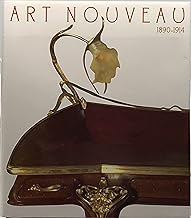
Art Nouveau: The Essential Reference (Dover Pictorial Archive) 300 Art Nouveau Designs and Motifs in Full Color (Dover Pictorial Archive)Art Nouveau, 1890-1914The Art Nouveau Style Book of Alphonse Mucha: All 72 Plates FromMucha (Basic Art Series 2.0)Art Nouveau Masterpieces of ArtArt Nouveau (World of Art)Art Nouveau: An Anthology of Design and Illustration fromArt NouveauGustav Klimt. Drawings and Paintings