Abstract art changed one of the most fundamental assumptions about art:
A painting did not have to look like something in the visible world.
For centuries, artists had painted recognizable:
- people
- landscapes
- buildings
- animals
- flowers
- historical events
- religious stories
Modern artists began asking a radically different question:
What if color, line, shape, and form could become the subject themselves?
A painting could communicate:
- movement
- rhythm
- harmony
- energy
- spirituality
- balance
- emotion
without depicting a recognizable scene.
Artists such as Wassily Kandinsky, Piet Mondrian, Kazimir Malevich, Robert Delaunay, Sonia Delaunay, and Paul Klee helped develop new approaches to abstraction during the early decades of the 20th century.
Their experiments helped establish abstract and non-objective art as major forces in modern art.
In this guide, we’ll explore the development of abstract art, the difference between abstract and non-objective art, important movements, famous abstract artists and paintings, and picture study suggestions you can use with children or students.
What Is Abstract Art?
Abstract art does not attempt to reproduce the visible world exactly as it appears.
Instead, artists may:
- simplify objects
- distort objects
- rearrange shapes
- exaggerate color
- flatten space
- reduce objects to geometric forms
Some abstract art still begins with something recognizable.
Imagine painting a tree.
You might simplify the trunk into a rectangle.
The branches might become lines.
The leaves might become circles.
Eventually, the tree may become so simplified that it is barely recognizable.
The artwork is now abstracted from reality.
That idea is important.
Abstract art exists on a spectrum.
A painting can be:
realistic → simplified → highly abstract → completely non-objective
What Is Non-Objective Art?
Non-objective art goes one step further.
It does not necessarily begin with a recognizable object at all.
Instead, the artwork may consist entirely of:
- lines
- shapes
- colors
- patterns
- textures
A painting containing only:
- red squares
- black lines
- yellow circles
- blue rectangles
might not represent anything in the physical world.
The colors and shapes are the subject.
This is sometimes called:
- non-representational art
- non-objective art
- pure abstraction
The terminology can vary, but the central idea is simple:
The artwork does not need to depict a recognizable object.
Abstract Art vs. Non-Objective Art
These terms are often used interchangeably, but there is a useful distinction.
Abstract Art
Abstract art may begin with something from the visible world and then:
- simplify it
- distort it
- rearrange it
- reduce it
You may still recognize the original subject.
Non-Objective Art
Non-objective art does not necessarily represent anything recognizable.
It may consist entirely of:
- color
- line
- shape
- form
A helpful way to remember the difference:
Abstract art can transform something.
Non-objective art doesn’t have to depict something at all.
When Did Abstract Art Begin?
Abstraction did not suddenly appear on one particular day.
Artists gradually moved toward it.
For the Curations timeline, approximately 1910–1944 works well as a broad period for the emergence and early development of abstract and non-objective art.
But its roots stretch backward.
1870s–1890s
Impressionists began loosening brushwork and emphasizing color and light.
1880s–1900s
Post-Impressionists such as:
- Van Gogh
- Cézanne
- Gauguin
increasingly altered color, shape, and perspective.
1905–1908
Fauvist artists liberated color from realistic representation.
1907–1914
Cubists broke recognizable objects into geometric planes.
Around 1910
Artists such as Kandinsky moved toward paintings with little or no recognizable subject matter.
1910s–1930s
Different forms of abstraction developed across Europe and Russia.
1940s
Abstract art became increasingly important internationally and helped prepare the way for Abstract Expressionism in the United States.
Historical Background and Timeline of Abstract Art
The development of abstract art is really a story of artists gradually taking things away.
First, realistic color became optional.
Then realistic perspective.
Then realistic shapes.
Eventually, recognizable objects themselves became optional.
1870s: Impressionism Changes Painting
Impressionists emphasized:
- brushwork
- color
- light
- atmosphere
rather than polished photographic realism.
1880s–1900s: Post-Impressionism Pushes Further
Van Gogh used color emotionally.
Cézanne simplified objects into geometric forms.
Gauguin flattened shapes and used symbolic color.
These experiments became important foundations for abstraction.
1905: Fauvism Liberates Color
Matisse and other Fauves demonstrated that a painting did not need realistic color.
1907: Cubism Begins Breaking Apart Form
Picasso and Braque challenged traditional perspective.
Objects became:
- fractured
- flattened
- geometric
Around 1910: Kandinsky Moves Toward Abstraction
Wassily Kandinsky created increasingly abstract works.
He believed color and form could communicate directly, much like music.
1911: Der Blaue Reiter Forms
Kandinsky and Franz Marc helped establish the Expressionist group Der Blaue Reiter.
Spirituality, symbolism, color, and abstraction became increasingly important.
1912: Kandinsky Publishes Concerning the Spiritual in Art
Kandinsky argued that color and form could communicate spiritual and emotional experiences.
1913: Malevich Develops Radical Geometric Abstraction
Russian artist Kazimir Malevich moved toward extremely simplified geometric compositions.
1915: Malevich Exhibits Black Square
A black square on a white ground became one of the most radical images in modern art.
The recognizable object had disappeared.
1917: De Stijl Is Founded
Dutch artists including Piet Mondrian and Theo van Doesburg developed a highly ordered geometric abstraction.
1919: Bauhaus Is Founded
The Bauhaus school in Germany brought together:
- art
- architecture
- design
- craft
Artists such as Kandinsky and Paul Klee taught there.
1920s: Mondrian Develops His Mature Style
Mondrian reduced painting to:
- vertical lines
- horizontal lines
- rectangles
- primary colors
- black
- white
1920s–1930s: Abstraction Spreads
Abstract art became increasingly international.
Artists explored:
- geometry
- color
- movement
- spirituality
- design
1933: Bauhaus Closes
The Nazi regime forced the Bauhaus to close.
Many artists and teachers eventually left Germany, helping spread modernist ideas internationally.
1930s–1940s: European Artists Move Abroad
Political upheaval and World War II displaced many European artists.
New York increasingly became an important center for modern art.
These developments helped prepare the way for Abstract Expressionism after World War II.
Characteristics of Abstract Art
Because abstraction includes many different styles, there is no single appearance.
Still, several characteristics appear repeatedly.
1. Simplification
Artists may reduce objects to basic:
- shapes
- lines
- colors
A tree may become a vertical line with circles.
A face may become geometric planes.
A city may become rectangles.
2. Geometric Shapes
Abstract art frequently uses:
- circles
- squares
- rectangles
- triangles
- lines
Some artists created extremely precise geometric compositions.
3. Non-Naturalistic Color
Colors do not need to match reality.
Artists can choose colors for:
- balance
- emotion
- symbolism
- contrast
4. Flattened Space
Traditional perspective may disappear.
Rather than looking through a window into a three-dimensional world, viewers become aware of the flat surface of the artwork.
5. Rhythm
Shapes and colors can repeat like musical beats.
Artists may create visual rhythm through:
- repetition
- alternating shapes
- color patterns
- repeated lines
6. Movement
Lines and shapes can create the illusion of:
- spinning
- bouncing
- flowing
- vibrating
7. Balance
Abstract artists often carefully organize visual weight.
A small dark shape may balance a large pale shape.
8. Color Relationships
Artists explore what happens when colors are placed beside one another.
Color itself can become the subject.
9. Emotion
Abstract art can communicate mood without recognizable imagery.
A composition may feel:
- joyful
- tense
- calm
- chaotic
- energetic
10. Experimentation
Abstract artists continually asked:
How much can I remove and still create a meaningful artwork?
Kandinsky and the Birth of Abstraction
Wassily Kandinsky is one of the most important figures in the history of abstract art.
He believed painting could work like music.
Music does not need to depict a tree or a person to affect us emotionally.
A melody can make us feel:
- joyful
- peaceful
- tense
- excited
Kandinsky wondered:
Could color and shape do the same thing?
His paintings gradually became less representational.
Eventually, they became arrangements of:
- color
- lines
- circles
- geometric shapes
- sweeping forms
Rather than asking:
“What is this a picture of?”
Kandinsky encourages us to ask:
“What does this arrangement of colors and shapes make me experience?”
Piet Mondrian and Geometric Abstraction
Piet Mondrian followed a very different path toward abstraction.
His early paintings included recognizable:
- trees
- landscapes
- windmills
Over time, he simplified them.
Branches became lines.
Landscape divisions became grids.
Natural color disappeared.
Eventually, Mondrian reduced his visual vocabulary primarily to:
- vertical lines
- horizontal lines
- rectangles
- red
- yellow
- blue
- black
- white
His mature paintings may look simple.
But their placement is carefully considered.
Mondrian explored:
- balance
- proportion
- harmony
- rhythm
His art demonstrates that simplicity does not necessarily mean randomness.
Kazimir Malevich and Suprematism
Russian artist Kazimir Malevich developed a radical form of geometric abstraction known as Suprematism.
He believed art could move completely beyond recognizable objects.
His compositions used simple forms such as:
- squares
- rectangles
- circles
- crosses
floating within open space.
His most famous work is:
Black Square
It is exactly what the title suggests:
a black square on a white background.
To viewers accustomed to portraits and landscapes, this was astonishing.
Malevich was asking:
Can a simple shape itself be art?
De Stijl
De Stijl, meaning “The Style,” developed in the Netherlands beginning in 1917.
Artists sought a universal visual language based on simplicity and order.
They reduced art to:
- horizontal lines
- vertical lines
- rectangles
- primary colors
- black
- white
Important artists included:
- Piet Mondrian
- Theo van Doesburg
De Stijl influenced:
- painting
- architecture
- furniture
- graphic design
Its clean geometric language remains recognizable in modern design today.
The Bauhaus
The Bauhaus was not simply an abstract painting movement.
It was an influential German school of art and design founded in 1919 by architect Walter Gropius.
The Bauhaus sought to unite:
- fine art
- architecture
- craft
- industrial design
Important artists associated with the school included:
- Wassily Kandinsky
- Paul Klee
- Josef Albers
- László Moholy-Nagy
Bauhaus artists explored:
- geometry
- typography
- color
- architecture
- furniture
- photography
The school had enormous influence on modern design.
Robert and Sonia Delaunay: Color and Movement
Robert Delaunay and Sonia Delaunay developed another approach to abstraction based on color.
Their work sometimes overlaps with a movement called Orphism.
Rather than limiting themselves to black lines and primary colors like Mondrian, the Delaunays embraced brilliant color.
Their compositions often feature:
- circles
- arcs
- overlapping shapes
- color contrasts
- visual rhythm
Sonia Delaunay extended these ideas into:
- clothing
- textiles
- books
- interiors
- decorative design
Her work is especially useful for showing children that modern art could cross the boundary between painting and everyday design.
Paul Klee: Abstraction and Imagination
Paul Klee created one of the most imaginative approaches to abstraction.
His paintings combine:
- geometric shapes
- symbols
- lines
- color
- recognizable objects
- invented forms
Some works are highly abstract.
Others resemble:
- cities
- faces
- gardens
- machines
- maps
Klee demonstrates beautifully that abstract art does not have to fit neatly into either recognizable or non-recognizable.
It can exist somewhere between the two.
Famous Abstract & Non-Objective Artists
Wassily Kandinsky (1866–1944)
Kandinsky explored the emotional and spiritual possibilities of:
- color
- line
- shape
- abstraction
Famous works include:
- Composition VII
- Composition VIII
- Yellow-Red-Blue
- Several Circles
- Improvisation 28
Piet Mondrian (1872–1944)
Mondrian gradually reduced landscapes and natural forms into geometric abstraction.
Famous works include:
- Composition with Red, Blue and Yellow
- Broadway Boogie Woogie
- Victory Boogie Woogie
- his abstract tree studies
Kazimir Malevich (1879–1935)
Malevich founded Suprematism.
Famous works include:
- Black Square
- White on White
- Suprematist Composition
Paul Klee (1879–1940)
Klee combined abstraction with imagination, symbolism, and playful line.
Famous works include:
- Senecio
- Castle and Sun
- Twittering Machine
- Ad Parnassum
Robert Delaunay (1885–1941)
Delaunay explored color, movement, and circular forms.
Famous works include:
- Simultaneous Windows
- Circular Forms
- Eiffel Tower paintings
Sonia Delaunay (1885–1979)
Sonia Delaunay explored abstraction through painting, textile design, fashion, and decorative art.
Her work frequently features:
- circles
- geometric shapes
- vivid color
- rhythmic repetition
Famous Abstract Paintings
Composition VIII — Wassily Kandinsky
Circles, lines, triangles, and arcs move across the canvas.
Look for:
- geometric shapes
- visual movement
- repetition
- balance
- contrast
Ask:
“If this painting were music, what would it sound like?”
Several Circles — Wassily Kandinsky
Colored circles float against a dark background.
The painting offers an excellent opportunity to discuss:
- size
- overlap
- transparency
- color
- balance
Composition with Red, Blue and Yellow — Piet Mondrian
Mondrian reduces painting to:
- black lines
- white space
- primary colors
Look closely at the rectangles.
The painting may appear simple, but the shapes are carefully balanced.
Black Square — Kazimir Malevich
A black square appears against a white ground.
Instead of asking:
“What is it supposed to be?”
ask:
“What changes when the artist removes everything except shape and contrast?”
Castle and Sun — Paul Klee
A city-like composition is constructed from colorful geometric shapes.
Children can often identify:
- rectangles
- triangles
- squares
- circles
It makes an excellent introduction to abstraction.
Abstract Art vs. Cubism
Cubism played an important role in the development of abstraction.
Cubism
Cubist artists usually began with recognizable objects.
They:
- fractured them
- simplified them
- rearranged them
Abstract Art
Abstract artists may simplify recognizable objects even further.
Non-Objective Art
Eventually, recognizable objects may disappear completely.
A useful progression is:
Cézanne simplifies.
Cubism fractures.
Abstraction reduces.
Non-objective art lets go of the object entirely.
Abstract Art vs. Expressionism
Expressionism and abstraction often overlap.
Expressionism
Expressionist artists change reality to communicate:
- emotion
- inner experience
- psychological intensity
Abstract Art
Abstract artists may remove recognizable imagery altogether.
Kandinsky connects the two beautifully.
His early works are Expressionist.
His later paintings become increasingly abstract.
Abstract Art vs. Abstract Expressionism
These terms are easy to confuse.
Abstract Art
Abstract art is the broad category.
It includes many approaches to non-representational and partially representational art.
Abstract Expressionism
Abstract Expressionism is a specific movement that developed primarily in the United States during the 1940s and 1950s.
Artists include:
- Jackson Pollock
- Mark Rothko
- Willem de Kooning
- Franz Kline
So:
All Abstract Expressionism is abstract art.
But:
Not all abstract art is Abstract Expressionism.
Abstract & Non-Objective Art Picture Study Suggestions
Wassily Kandinsky Picture Study
Try:
- Composition VIII
- Several Circles
- Yellow-Red-Blue
- Improvisation 28
- Color Study: Squares with Concentric Circles
- one earlier representational work
Look for:
- line
- color
- movement
- rhythm
- geometry
Piet Mondrian Picture Study
Try:
- an early tree painting
- a later abstract tree
- Composition with Red, Blue and Yellow
- another grid composition
- Broadway Boogie Woogie
- Victory Boogie Woogie
Studying Mondrian chronologically is especially valuable.
Children can actually watch the subject disappear.
Paul Klee Picture Study
Try:
- Castle and Sun
- Senecio
- Ad Parnassum
- Twittering Machine
- one garden painting
- one geometric composition
Sonia and Robert Delaunay Picture Study
Try:
- one Robert Delaunay circular composition
- one Eiffel Tower painting
- Simultaneous Windows
- one Sonia Delaunay geometric composition
- one textile design
- one fashion design
Look for:
- circles
- color
- repetition
- movement
- rhythm
How to Do a Simple Abstract Art Picture Study
Choose one artwork and allow your child to study it quietly.
Then remove it.
Ask:
“What do you remember?”
With abstract art, children may initially say:
“But there’s nothing in it!”
That’s actually a wonderful starting point.
Ask them to narrate:
- colors
- shapes
- lines
- positions
- patterns
Then look again.
You might ask:
- Which color did you notice first?
- What is the largest shape?
- Which shapes repeat?
- Where does your eye go next?
- Does anything appear to move?
- Is the composition balanced?
- Does it feel calm or energetic?
- Are the lines straight or curved?
- What would happen if one shape disappeared?
- Does the painting remind you of anything even if it isn’t actually a picture of that thing?
Abstract art teaches children to look at the elements of art themselves.
How to Recognize Abstract & Non-Objective Art
Look for simplified objects.
Can you recognize something from reality, but only barely?
That may be abstraction.
Look for geometric shapes. Do circles, rectangles, lines, and triangles dominate?
Look for unrealistic color. Color may be chosen for relationships rather than realism.
Look for flattened space. Traditional perspective may disappear.
Look for rhythm and repetition. Shapes may repeat like beats in music.
Look for no recognizable subject at all.
If the artwork consists entirely of shapes, colors, and lines, it may be non-objective.
Most importantly, don’t ask only:
“What is it?”
Ask:
“What are the colors, lines, shapes, and forms doing?”
Easy Abstract Art Activities for Students
Abstract a Tree
Draw a realistic tree.
Then draw it again with fewer details.
Draw it a third time using only:
- lines
- rectangles
- circles
See how far you can simplify it while still remembering the tree.
Make Kandinsky Music Art
Play instrumental music.
Respond using:
- lines
- colors
- shapes
Try changing your marks when the music changes.
Create a Mondrian Composition
Use:
- vertical black lines
- horizontal black lines
- red
- yellow
- blue
- white
Arrange rectangles in different sizes.
Pay attention to balance.
Create a Klee-Inspired City
Build a city using:
- squares
- rectangles
- triangles
- circles
Experiment with color relationships.
Make a Delaunay Circle Design
Overlap:
- circles
- semicircles
- arcs
Fill the shapes with contrasting colors.
Create Non-Objective Art
Do not draw any recognizable object.
Use only:
- line
- shape
- color
Then give the artwork a title based on how it feels.
Compare Realistic and Abstract Art
Choose one subject.
Paint it realistically.
Then simplify it.
Then abstract it.
Finally, create a completely non-objective composition inspired by the same colors.
Frequently Asked Questions About Abstract & Non-Objective Art
What is abstract art?
Abstract art moves away from realistic representation by simplifying, distorting, rearranging, or emphasizing elements such as color, line, shape, and form.
What is non-objective art?
Non-objective art does not depict recognizable objects.
The artwork may consist entirely of:
- colors
- lines
- shapes
- forms
What is the difference between abstract and non-objective art?
Abstract art can still be based on something recognizable.
Non-objective art does not need to represent an object at all.
When did abstract art begin?
Modern abstraction developed gradually during the late 19th and early 20th centuries.
Artists began producing increasingly non-representational work around 1910.
Who invented abstract art?
There is no single universally agreed-upon inventor of abstract art.
Several artists moved toward abstraction around the same period.
Wassily Kandinsky is one of the artists most frequently associated with the development of purely abstract painting, but other artists were also independently experimenting with non-representational imagery.
Who are famous abstract artists?
Important early abstract artists include:
- Wassily Kandinsky
- Piet Mondrian
- Kazimir Malevich
- Paul Klee
- Robert Delaunay
- Sonia Delaunay
Was Kandinsky the first abstract artist?
Kandinsky is often described as a pioneer of abstract painting, but historians have identified other artists who also created abstract or non-representational works during the same broader period.
It is more accurate to describe him as one of the pioneers of modern abstraction.
Was Mondrian always an abstract artist?
No.
Mondrian began by painting recognizable landscapes and trees.
His work gradually became increasingly geometric and abstract.
What is Suprematism?
Suprematism was an abstract movement developed by Kazimir Malevich.
It used simple geometric shapes and emphasized pure artistic feeling rather than recognizable objects.
What is De Stijl?
De Stijl was a Dutch modern art movement associated with artists such as Piet Mondrian and Theo van Doesburg.
It emphasized:
- horizontal and vertical lines
- geometric forms
- primary colors
- simplicity
- order
What was the Bauhaus?
The Bauhaus was a German school of art, architecture, craft, and design founded in 1919.
It became enormously influential in modern:
- architecture
- furniture
- typography
- graphic design
- art education
Why did artists stop painting recognizable objects?
Artists increasingly believed color, line, and shape could communicate without representing objects.
They were interested in:
- emotion
- spirituality
- rhythm
- balance
- movement
- pure visual experience
Is all modern art abstract?
No.
Many modern artists continued to paint recognizable:
- people
- landscapes
- objects
Modern art includes both representational and abstract approaches.
Is Abstract Expressionism the same as abstract art?
No.
Abstract art is a broad category.
Abstract Expressionism is a specific American art movement that emerged in the 1940s.
What abstract artists are best for children to study?
Kandinsky, Mondrian, Paul Klee, Sonia Delaunay, and Robert Delaunay are excellent choices.
Their work provides natural opportunities to study:
- shape
- line
- color
- rhythm
- balance
- movement
Explore Color, Line, and Shape Through Abstract Art
Abstract art gives children an entirely different way to look at art.
Instead of immediately asking:
“What is it supposed to be?”
ask:
“What do you actually see?”
A red circle.
Three black lines.
A yellow rectangle.
A cluster of blue shapes.
A line that seems to race across the page.
A shape that feels heavy.
A color that feels loud.
Suddenly, the child is paying attention to the building blocks artists have always used:
line, shape, color, form, space, texture, rhythm, and balance.
That is one reason abstract art can be so valuable in art education.
It teaches children that art does not always need to tell us what to see.
Sometimes it asks us to notice how seeing itself works.
As you study abstract and non-objective art, ask:
“What is your eye doing as it moves around this artwork?”
Then ask:
“How did the artist use color, line, and shape to make that happen?”
Those questions move children beyond:
“I could do that.”
and toward the much more interesting question:
“Why did the artist choose to do it this way?”
And that is where abstract art becomes fascinating.
To learn more, read these books:
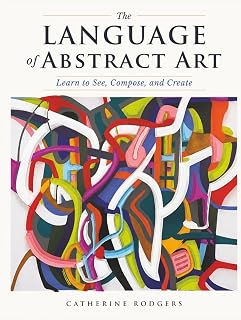
Meet Wassily Kandinsky (Meet the Artist) Meet Piet Mondrian (Meet the Artist)Meet Paul Klee (Meet the Artist)Abstract Art (Basic Art)Abstract Art (World of Art)Abstract Art (Art Essentials)The Language of Abstract Art: Learn to See, Compose, and CreateSonia Delaunay: A Life of ColorPaul Klee: Activities for Kids (Meet the Artist Books)Malevich (Basic Art)